|
| |
Contributions To Psychology
Dr.
Will Cupchik has contributed numerous developments to the field of psychology,
including the following:
IN THE AREA OF STEALING
CARRIED OUT BY USUALLY HONEST ADULTS:
-
originator of the Loss
Substitution By Stealing Hypothesis that articulates the connection
between what an individual perceives as unfair, personally meaningful
losses and their acting out via theft behavior;
-
senior author of the
article entitled Shoplifting: An Occasional Crime Of The Moral
Majority, published in the professional journal, The Bulletin of
the American Academy of Psychiatry and the Law, in 1983
-
author of numerous other
articles on this subject that have been published in professional journals,
newsletters
-
developer of two
assessment tools, the Cupchik Theft Offender
Questionnaire © and the Cupchik
Theft Offender Spectrum ©
-
originator of a considerable
number of innovative approaches to working with these clients
-
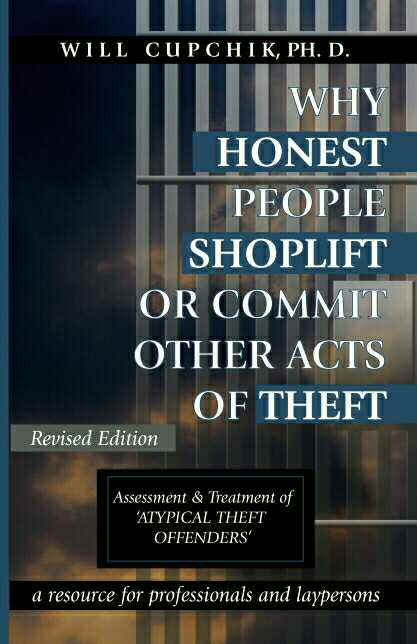
author of the book,
WHY HONEST PEOPLE SHOPLIFT OR COMMIT OTHER ACTS OF THEFT, REVISED EDITION
©
[March 2002] [ISBN 1-896342-08-6]
-
providing the website, WhyHonestPeopleSteal.com
that offers over 160 (copyrighted) pages of information about the phenomenon
of usually honest adults who steal
IN THE AREA OF ASSESSING AND ALTERING
RELATIONSHIPS: PAST, PRESENT, AND FUTURE
- originator Reintrojection
Therapy, a psychotherapeutic technique
that allows for altering parental and other introjects that the individual
lives with, and that affects how he or she interacts with other persons. An
article describing this approach was published in the professional journal Psychotherapy:
Theory, Research and Practice in 1984
- developed the Cupchik
Relationship Questionnaire ©, a
24-item multiple choice questionnaire that assesses personal relationships
on four dimensions
- originator of 'The
Rope Trick' ©, the optimal
fantasy exercise with which to assess the statics and dynamics of an
interpersonal relationship
IN THE AREA OF GESTALT THERAPY
- Originated the
One Way Mirror -
Soundproofed Room technique to assist clients who are reluctant to confront
'significant others' in the 'empty chair' because of imagined retribution if
they do so
|