Compulsive
shoplifters and other laypersons
(i.e., the theft
offenders themselves as well as their relatives and
friends, all of whom are interested in helping to stop this
seemingly bizarre, nonsensical - and illegal and ultimately
self-destructive - theft behavior;
professionalsincluding
psychologists, psychiatrists, social workers, lawyers, judges,
probation and parole officers, loss prevention personnel and any
others whose professional duties involve dealing with usually
honest people who have committed acts of theft;
the
media
including print, radio, and television reporters and
documentary film producers who are interested in providing
their readers/listeners/viewers/audiences with informative
human interest articles and programs regarding the phenomenon
of seemingly nonsensical or bizarre stealing, and
students
of the human conditionwho
will recognize from the material on (or referenced on) this
web site, that cases of atypical theft behavior often provide
some of the best illustrations of unconscious motivations
manifesting themselves at an observable behavioral level,
leading certain individuals to act out via behaviors that
offend against their own moral and ethical and usual ways of
functioning in the world, to the extent that they risk so much
in terms of personal and/or professional reputation, for
(often) relatively so little material gain.
This page
provides an abbreviated summary of the over 29 years of original
clinical investigations of, and the assessment and
treatment programs developed by psychologist Dr. Will Cupchik
for the population of usually honest people who have
stolen.
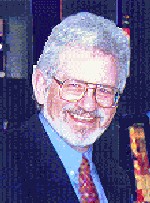
Dr. Cupchik is the
original, senior investigator to study the phenomenon of '
atypical theft behavior' by usually honest persons.
In the book CLINICAL
CRIMINOLOGY:The Assessment and Treatment of Criminal Behavior
published in 1985, he and his co-investigator termed these
individuals 'Atypical Theft Offenders'.
During the past nearly
three decades, Dr. Cupchik has developed extensive , innovative
assessment and treatment programs for these individuals, who include
among them 'atypical shoplifters' and 'compulsive shoppers'. In
his book, WHY HONEST PEOPLE SHOPLIFT OR COMMIT
OTHER ACTS OF THEFT, Dr. Cupchik describes the approaches
that he has designed and often employs in the multi-day Intensive
Intervention Programs that he continues to conduct personally.
***********************
Both electronic and
print media have shown considerable interest in his work over the years.
Dr. Cupchik has appeared on...CBS's
Early Show*,
MSNBC
Investigates, ABC's
Good Morning America,
CBS NEWS 48 Hours,
The Sam Donaldson Radio
Show, Lifetime
Network's New Attitudes Program, and has been
interviewed by and quoted in Bloomberg
News, The New York
Times, Los
Angeles Times, San Francisco Chronicle,
Chicago Sun-Tribune, and many other media programs
and publications.
In 1983
psychologist Dr. Will Cupchik and psychiatrist Dr. D.J. Atcheson*,
originally identified the clinical population of 'Atypical
Theft Offenders'.
Since 1979 Dr. Cupchik
has continued to refine his unique, focused clinical assessment
and treatment approaches for this most interesting and,
far too often, mis-diagnosed [ as suffering from
kleptomania, and consequently mis-treated both
clinically and by the courts] population.
*Dr.Atcheson
was Senior Psychiatrist and Dr. Cupchik was Psychologist-in-Charge,
Forensic Outpatient Psychological Services, on the
forensic service of the Clarke Institute of Psychiatry. Their
original ground-breaking article, Shoplifting: An
Occasional Crime of the Moral Majority, was published in
the professional journal, the Bulletin of the American
Academy of Psychiatry and the Law, in 1983.
The
INTENSIVE INTERVENTION PROGRAMS offered by Dr. Cupchik
for Atypical Theft Offenders (including 'atypical shoplifters'
and 'compulsive shoppers') are described in detail
on this site.
U.S.
Residents, please note: Intensive Intervention Program
participants from the United States find that the very
favorable exchange rate of the $U.S. relative to the $Cdn
makes their stay in Canada, including hotels, meals and
entertainment, considerably less expensive than would be
the case if it were held at most major sites in the U.S.A..
(Currently
$1U.S. is worth about $1.35Cdn; of course, rates change from
time to time and may vary somewhat from establishment to
establishment.)
Dr.
Cupchik is currently offering participants in the Intensive
program the option of either coming to Toronto, or
to one of three new alternate locations where their own
Intervention programs may be held:
Niagara Falls,
Ontario a
thirty minute car ride from the Buffalo, New York
airport, which is serviced by Southwest Airlines, as
well as several other major U.S. air carriers, and
Since it is strongly
recommended that attendees enjoy their time away from the
Intensive sessions, Niagara Falls is a natural venue that
provides numerous attractions, including what are generally
considered the very best views of the Falls! A 12 mile long
walking/running/cycling path that follows the north bank of the
Niagara river also provides a great recreational and relaxing
respite from our work.
Guelph, Ontario,
a smaller university city located an easy half-hour drive
from Toronto International Airport.
Guelph is an
attractive, smaller city, home to the University of Guelph, and
is easy driving distance from Stratford, where the world-famous Stratford
Shakespearian Festival puts on plays by William Shakespeare
that, each year, are attended by audiences from all over the
U.S. and Canada.
Windsor,
Ontario, a
city directly across the river from Detroit
Some American clients may
find it convenient to fly into Detroit, and simply take a rental
car or a cab across to the Canadian side of the Detroit river.
The
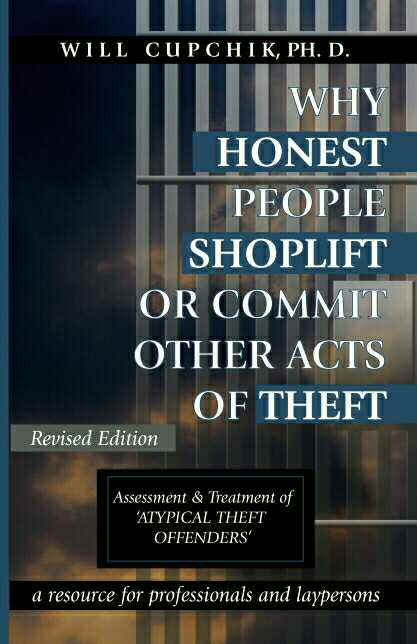
latest edition of Dr. Cupchik's book, WHY HONEST
PEOPLE SHOPLIFT OR COMMIT OTHER ACTS OF THEFT, Revised Edition [2002]*
** is now available.
This revised edition of the
book is distributed by Ingram, the largest book distributor in
the U.S.A.; its ISBN
number is 1-896342-08-6. The
fastest (and possibly least expensive) way to purchase
the book is by ordering it online from either
booklocker.com,
or
barnesandnoble.com.
Please note that some
purchasers of the book were erroneously told by someBarnes and
Noble's and other 'bricks' bookstores that the book is not
available. That are entirely wrong. There appears to be a
(hopefully temporary) glitch in the distribution and listing of
this book. The best way to order the book currently (with the
least hassle) is ONLINE through either of the above-listed two
'online bookstore' sites. In
fact,The latest paperback version of this book is
currently ranked at - or near- the top of the list of bestselling
titles listed in the 'shoplifting', and 'kleptomania'
categories on BarnesandNoble.com.
* Note# 1: The e-book
edition is only available from booklocker.com,
and can be downloaded onto your own computer within
minutes.
** Note
# 2: : The original ( 1997) edition of the book has almost
sold out; a few copies may still be available for Canadian
purshasers only, through Caversham Booksellers, a
dedicated psychology and psychiatry bookstore located in
Toronto. Canadian purchasers may wish to call Caversham at
1-800-361-6120 to ascertain availability and cost.
You may email a
question or subject that you would like Dr. Cupchik to consider
responding to on the ASK
DR. WILL Q & A web page. Dr. Cupchik will respond to
approximately one question or issue a week. Unfortunately, he
may not be able to respond to each question individually.
Hopefully, the questions that will be answered will be of
interest to many of the visitors to this web page. Just email
your question to wcupchik@aol.com.
FREE
Brief [15 minute max]
Telephone Consultation:
Dr. Cupchik personally provides a free brief consultation for potential
participants of the Intensive Intervention Programs only.
Contact him either by telephone at 416-928-2262, or by
e-mail, via wcupchik@aol.com
.
MOST IMPORTANT: Before
contacting Dr. Cupchik, please review all of the material on
this web site, so the the brief consult can be focused on the
particular case in question. Both the prospective client and his
or her significant other(s) should have thoroughly reviewed this
website beforehand, including especially the Intensive
Intervention Program web page, and the 4FREEchapters web page.
Dr. Cupchik only offers the
free brief consult to the prospective participant and his
or her significant other. Thank you.
A
REQUEST FOR FEEDBACK FROM
VISITORS TO THIS SITE REGARDING THE USE OF MAJOR
ANTI-DEPRESSANTS TO CURTAIL COMPULSIVE SHOPLIFTING AND/OR
COMPULSIVE SHOPPING:
As part of his ongoing
clinical investigations, Dr. Cupchik is very interested in
acquiring as much information as possible about the experiences
of individuals who have been prescribed major anti-depressants
to assist them in reducing or stopping their theft behavior. If
you care to contribute to this investigation, kindly e-mail Dr.
Cupchik at wcupchik@aol.com,
and let him know your experience in detail, including whether
it is your personal impression that your stealing behavior (A)
has been curtailed, (B) has hardly at all affected, or (C) has
worsened during the period you have been on anti-depressants. Please
share which anti-depressant(s) you were on, for what
length of time, and what were any other of your impressions,
reactions, etc..., while on the medication.
Thank you in advance for
your input. Eventually, results of this study will be posted on
its own page on this website.
Disclaimer
Box: All information on this site is provided in general
terms and is not meant to apply, nor may it apply, to your
particular situation or the one you are interested in, and may
not be legally current at the time you read it. The
information on this site is not intended to serve as a
replacement for professional legal advice or appropriateexpert
psychological counseling. The author and Dr. Will Cupchik
specifically disclaim any and all liability arising directly or
indirectly from the use or application of any information
contained on this web site. The appropriate professional should
be consulted regarding your specific condition, situation or
circumstances. WhyHonestPeopleSteal.com does not
take responsibility for the information posted on, or any other
aspect of, any other sites to which it is linked, or which may
be mentioned on this site.
3-DAY
or 4-DAY INTENSIVE INTERVENTION PROGRAMS
for
Atypical Shoplifters, other Atypical Theft
Offenders, and Compulsive Shoppers
Feedback
from some previous participants:
From a New York
participant: "It has been over four years
since I took the Intensive Intervention Program. I would
like you to know that I have not shoplifted since, and I
am feeling better about myself than I ever have
before. I am doing really well in my working and
personal aspects of my life, and have already achieved
most all of the positive goals I had set for myself
during this period. Dr. Cupchik helped me to realize why
I might have been shoplifting, and helped point out
stressful situations might tempt me to engage in the
behavior again. This watchfulness has helped me avoid
such situations, or when they were unavoidable, to
handle them differently . I also realize that in order
to continue to not steal I need to deal with
the issues that will emerge in my life by facing them
directly, and using the tools I gained during our work
together. As a result, while there have been stressful
situations that I have had to deal with since our
working together, I have not even been tempted to
steal."
From a participant
from Florida: " The intensive, which I
did with two other members of my family present, has
enabled us all to reveal the truths that we had not
talked about in decades. The
experience
led me/allowed me/ made me, examine those dark
moments in my life in a more fully connected way
... and to appreciate the roles of the major losses that
I had experienced in childhood in my theft behavior...
and to more openly share ...my reality with my mother
and sister who had accompanied me and also took
part in the Intensive.. Naming it an
"Intensive" is very apt. The experience
has already led to an incredible improvement in our
family dynamics."
From a participant from
South Carolina: "Dr. Will. Having attended your
Intensive program last year to deal with my
compulsive spending, accompanied by my wife and 2 two
year old daughter, I wanted to give you an update on my
progress. I have not been involved in any
compulsive spending since the Intensive. I have
found other, much more productive ways of dealing with
my feelings about myself and the situations I have been
facing. I have also been dealing with my
problems with intimacy much better, and have
increasingly made my family my priority. I have also
defined and redirected my career in a much more focused
way. The Intensive was very helpful in coming to
terms with my compulsive shopping, and underlying
issues, and the exercises you offered have really
helped. My wife and and I both felt we gained a lot of
insight in many ways from the time and effort. Thank
you."
From a Texas
participant: "There
is not one specific formula for what Dr. Cupchik does
that fits all. It is a very
intensive program. But I can not say he will do this and
then this and then that. Many of his techniques are
described in the book and on his website. Which ones he
uses with individual patients I assume would vary. He
works mostly with people who steal due to some sense of
loss. If anger sets you into a stealing mode, he can
probably help you. If you have recently or a long time
ago experienced some great loss, he can probably help
you. Most of all it is about digging deep within you to
discover or better understand what the demon (my term)
is that makes you react this way. I found him to be
exceptional at his therapeutic approach, and the
experience was very beneficial to me and my family.
Perhaps the most life altering effect for me was
validation and acceptance at a very fundamental level.
Something that is difficult to find if it was not
instilled in you early in life.
For
those who might simply be looking for some kind of
'report' to get you some kind of leniency from the
court, or who do not steal in response to some demon
(but rather, you are quite comfortable with --and fully
desire and intend to-- continue to steal, and if you
have no sense of remorse or shame about your stealing,
then you are probably primarily what he calls a Typical
Theft Offender, and) his program is definitely not be
the one for you.
In 1977 psychologist
Dr. Will Cupchik, together with his co-investigator, senior
psychiatrist Dr. D.J. Atcheson, first identified the
clinical population of essentially honest persons who committed
acts of shoplifting and/or other thefts, terming them 'Atypical
Theft Offenders'.
Their groundbreaking 1983
article, Shoplifting: An Occasional Crime of the Moral
Majority, was published in the professional
journal, the Bulletin of the American Academy of
Psychiatry and the Law. This article, Dr. Cupchik's
subsequent publications (see the Resume web page for a listing),
plus his presentations to various professional groups, have led
the way to an even greater understanding of the reasons behind
such unusual and bizarre conduct on the part of otherwise
usually law-abiding and ethical individuals, and the development
of unique and dedicated ways of helping them to prevent this
behavior.
Dr.
Cupchik is:
the most senior clinical
investigator of the phenomenon of usually honest
people who steal
author of the book, Why
Honest People Shoplift Or Commit Other Acts Of Theft,
Revised Edition, 2002,
Head of the Intensive
Intervention Program for Atypical Shoplifters and
other Atypical Theft Offenders, and was...
formerly,
the Psychologist-in-Charge, Forensic Outpatient
Psychological Services, at the Clarke Institute of
Psychiatry, Toronto.
THE
INTENSIVE INTERVENTION PROGRAM IS A ONE-ON-ONEEXPERIENCE CARRIED OUT WITH DR. CUPCHIK
PERSONALLY.
THE
PROGRAM IS HELD AT A TIME ARRANGED DIRECTLY BETWEEN THE
ATTENDEE AND DR. CUPCHIK, WHEN IT WILL BE CONVENIENT TO
THEM BOTH, AND TO ANY 'SIGNIFICANT OTHER(S)' (I.E.,
PARTNERS OR SPOUSES, FAMILY MEMBERS) WHO WILL BE
ACCOMPANYING THE PARTICIPANT. THE PROGRAM
INVOLVES BOTH ASSESSMENT AND TREATMENT,
AND IS CONDUCTED OVER THREE OR FOUR DAYS, AS AGREED UPON
BEFOREHAND.
THIS WEB
PAGE, TOGETHER WITH THE OTHER WEB PAGES ON THIS SITE,
CONTAIN SUFFICIENT INFORMATION TO ASSIST PROSPECTIVE
CLIENTS AND THEIR RELATIVES AND FRIENDS TO BE APPRAISED
OF THE GOALS, SCOPE, TIMING, AND CONTENT OF THE
INTENSIVE INTERVENTION PROGRAMS. THE
PROSPECTIVE PARTICIPANT AND HIS OR HER SIGNIFICANT
OTHER(S) ARE REQUESTED TO PLEASE READ THE INFORMATION
ON THIS SITE THOROUGHLYBEFORE
CONTACTING DR. CUPCHIK TO REQUEST A FREE BRIEF
CONSULTATION.
As noted
above, a 'Certificate of Completion' is provided to all
participants who are considered to have fully involved
themselves in the Intensive process and have completed
the entire three or four day program.
The
INTENSIVE INTERVENTION PROGRAM is offered in two
formats - 3-DAY AND 4-DAY VERSIONS.
WHY IS
THE INTENSIVE INTERVENTION PROGRAM OFFERED IN THESE TWO
FORMATS?
The Three-day
[16 clinical sessions: 50 minutes each in length] format
is the original basic Intensive program. The
three days are often sufficient to cover the aims of the
Intensive when only the client and just one
'significant other' (a partner, parent or other
important person in the attendee's life) are
taking part. just one
'significant other' (a partner, parent or other
important person in the attendee's life) are
taking part. just one
'significant other' (a partner, parent or other
important person in the attendee's life) are
taking part.
Experience
with this original three-day format has been very
positive. At the same time, however, in some instances,
the attendee has major issues that are related to other
key persons in his or her life, and where the presence
and involvement of these other persons in parts of the
program is very highly desirable for optimal outcome.
Because
the programs are indeed intensive, and in order
to accommodate and deal with the participation of more
than one 'significant other', the additional five
clinical sessions that take place during the four-day
program allow the time and space in which to help the
attendee deal with issues pertaining to him/herself and
the additional 'significant others'. Some
clients bring two, three or even four 'significant
others' with them. The three-day program simply cannot
provide enough time and opportunity to adequately
involve, and make therapeutic use of, these important
persons in the attendee's life. Therefore,
if more than one 'significant other' is to be
involved in the Intensive, only the Four-day program is
offered.
WHAT
KINDS OF INTERVENTIONS ARE INVOLVED IN THE
INTENSIVE INTERVENTION PROGRAM?
During
the course of the 16 or 21 clinical sessions of a three
or four day Intensive program, the theft offender (the
official 'client') and every other participant (spouse,
friend, adult child, or parent) is seen at least once on
his or her own and, depending upon the material that is
uncovered and the nature of the therapeutic work that is
deemed desirable to assist the theft offender, sessions
involving one or more of the other participants working
together with the 'client', may take place. It
should be noted that, in effect and in fact, some of the
sessions may involve 'couples', family,
adult-child & parent, siblings, and/or group
therapeutic work.
Dr.
Cupchik has been doing counseling and psychotherapy for
over 40 years and has been a full member of the American
Psychological Association and
the American
Group Psychotherapy Association,
for over two decades.
He
is the developer of Reintrojection
Therapy and many other
original assessment and therapeutic tools which have
turned out to be of great value in working with many
atypical theft offenders, including some that allow for
the examination and altering of our most important
interpersonal relationships.
He
initiated the very first therapy program for Atypical
Theft Offenders over two decades ago while working on
the forensic service of the Clarke Institute of
Psychiatry.
Most
of the various assessment and therapeutic tools and
techniques he has developed and refined over the past
four decades are brought into use during the course of a
typical Intensive Intervention Program.
It
is Dr. Cupchik's clinical opinion, based upon the better
part of three decades work in the field, that truly
effective work with individuals who have problems with
compulsive stealing and/or shopping involves the use of
a variety of dedicated approaches such as the ones
mentioned above; anything less may merely offer some temporary
'band-aid' effectiveness.
The
principal aims of all the Intensives that Dr.
Cupchik conducts is long-term change and the minimizing
or elimination of any further theft behavior.
Are
you, your client, or your loved one, an Atypical Theft
Offender [ATO]? How do you know whether it is appropriate
to consider this program?
Do
you:
have
trouble stopping shoplifting even though you consciously
want to do so?
feel
embarrassment or remorse about your theft behavior?
feel
frightened because, in spite of your efforts to stop the
theft behavior, you are still 'out of control'?
fear
that your livelihood, relationships, or even your freedom
are at risk because you don't/won't stop stealing?
recognize
that, in spite of your 'good intentions', you are
still stealing?
suspect
that your reasons for stealing are more complex and
difficult to deal with than you have been able to handle on
your own, or even with months/years of therapy, or
supposedly 'specialized support groups'?
think
that you may benefit from expert assistance by the most
experienced clinician in the field of atypical theft
behavior, and the originator of many of the assessment and
therapeutic procedures for dealing with these problems, as
outlined in his book and articles?
If
you answered yes to any of the above questions, then read
carefully the materials on this and the other web pages on this
site, and consider the possible usefulness of the Intensive
Intervention Program described in detail below. If, after
reading these materials, you think that you might be a suitable
candidate for the Program, either email Dr. Cupchik at wcupchik@aol.com
or phone him at 416-928-2262 to discuss the possibility further.
GOALS
of the Intensive Intervention Program:
The goals for this program are
the clinical assessment and treatment of the
individual having difficulty with atypical theft behavior,
including compulsive stealing (frequently, shoplifting) and/or
compulsive shopping, with the aim of assisting the attendee to
cease such behavior.
Previous
participants have included a very large proportion of folks from
the United States, including those from Alaska, Arizona,
California, Florida, Illinois, New York, North Carolina, Ohio,
Oregon, Texas, and Washington.
Some
attendees have found that participation in this program was
sufficient for them to cease their compulsive or out-of-control
stealing or shopping entirely.
Full
and open involvement in the Intensive Intervention Program
process has helped most participants resolve many of the
underlying issues that have been precipitating their acting out
via atypical theft or shopping behavior. Findings made
during the program assist Dr. Cupchik in offering specific
suggestions and direction for follow-up work with local
therapists, if such is deemed desirable.
WHAT:
The Atypical Theft Offender (ATO)
Intensive Intervention Programs are the latest development
of over 29 years of clinical investigations by registered
psychologist Dr.
Will Cupchik who, in 1981,
developed the first individual and group therapy
programs for essentially honest persons who had stolen.
In
1985 Dr. Cupchik and his
co-investigator psychiatrist Dr. D.J. Atcheson coined the term Atypical
Theft Offenders to refer to these individuals.
WHO:Dr. Cupchik personally
conducts the programs, which consist of
either
three days
with sixteen (16) clinical sessions (each 50 minutes long),
carried out over three days,
or
four days with
twenty-one (21) clinical sessions (each 50 minutes long),
carried out over a period of four days,
as
agreed upon beforehand. The
theft offender is strongly encouraged to bring along, when
possible, at least one of the key persons in his or her
life, including perhaps the individual(s) with whom the offender
still has major unresolved issues. Frequently these 'significant
other' persons will include the attendee's partner, parent(s),
grown children, or close friends. These 'significant others'
must be willing to become involved in one or more of the
sessions, as required and requested.
WHEN:Sessions
are usually conducted on Sunday through Tuesday (or Wednesday
in the case of the four-day format), unless otherwise
arranged; this minimizes time away from work and home for
most attendees, and also allows them to perhaps save on air
fares by staying over on Saturday night. Each day's
sessions begin at 10am, and usually finish before 5pm, with an
extended lunch break. Sessions are 45 minutes long; often Dr.
Cupchik will work for longer periods at one stretch; the total
amount of time over the number of days agreed upon will be the
same, however. {16 [45-minute]
sessions for the three-day intensive; 21 [45-minute] sessions
for the four-day Intensive.}
WHERE:Currently the Intensive
Intervention Programs are offered in four different
locations.
Toronto, Ontario at
Dr. Cupchik's office
Guelph,
Ontario ( a smaller city less than a 45-minute drive from
Toronto International Airport
Niagara Falls,
Ontario (a thirty minute car
ride from the Buffalo, New York airport (which
is serviced by Southwest Airlines, as well as several
other major U.S. air carriers), and
Windsor,
Ontario, just across the river
from Detroit, and the Detroit International
Airport.
Attention
U.S. Residents: As
mentioned above, Intensive
Intervention Program participants from the United States
find that the very favorable exchange rate of the $U.S.
relative to the $Cdn makes their stay in Canada,
including hotels, meals and entertainment, much less
expensive than would be the case if it were held in
the U.S.A..
(Currently
$1U.S. is worth about $1.45Cdn; of course, rates vary
from time to time and may vary somewhat from
establishment to establishment.)
Between-session
times: It is very highly recommended
that each attendee to the program bring along at least one
so-called 'significant other' [either a spouse or partner,
parent, adult child, sibling or very close friend] who knows
about the theft behavior problem and the real purpose of these
sessions.Between
sessions the client and 'significant other' can share and
de-brief and also find time for relaxation to counter the
intensity of the sessions themselves. Ideally, the 'significant
other' will be someone who could contribute to the clinical
process and who is willing to participate in some sessions, if
and as requested.
The
INTENSIVE INTERVENTION PROGRAM Format
Sunday:The
three-day Intensive Intervention Program usually begins
on Sunday at 10 am. Six sessions, each 50 minutes long
take place during this first day of the program.. One or more of
the sessions throughout the program may involve the 'significant
other' person, being present, if and as desirable, and, of
course, with the agreement of the attendee.
Most
sessions involve both assessment and therapeutic components.
Nearly three decades of Dr. Cupchik's clinical investigations
with these cases have made it very clear that, while most of
these cases have a good deal in common, each case may also
markedly different from others in some ways, and therefore it is
impossible to use a 'cookie-cutter' approach or automatic
'formula' when working with individuals who present with
compulsive or bizarre stealing or shopping. Therefore, each
attendee's program is structured, as the work continues
throughout the three days, to fit the emerging needs and issues
of the individual.
The
client's Significant Other or S.O., (often, a parent or partner)
is also interviewed, alone and/or with the client present.
Monday:
The program continues on Monday with six sessions. The
sessions continue to have both assessment and treatment
components, and often a considerable number of issues and
underlying motivations for the attendee's inappropriate acting
out behavior are uncovered and worked on. Issues between
the attendee and his or her Significant Other, that have until
now remained unresolved, are often dealt with as well.
Tuesday:
The three-day program
concludes on Tuesday
[see Last Day,
below]
The
four-day program utilizes Tuesday as primarily a
psychotherapy-oriented day, lasting five clinical sessions,
continuing the work of the previous days, and involving the
'significant others' whenever and wherever appropriate.
Last
Day:
.The three-day program concludes on Tuesday
[the four-day program concludes on Wednesday] usually by 4 p.m.,
with four sessions, involving the attendee alone and/or with the
'significant other'. At that time, Dr. Cupchik provides the
conscientious attendee with a written summary of areas worked
on, a Certificate of Completion, and recommendations for any
follow-up with local therapists.
By
the end of their programs most attendeeshave
reported making very considerable progress in uncovering and
dealing with the underlying issues that precipitated their
compulsive stealing or shopping behavior.
May
An Attendee Opt For The Longer Program To Deal With
Other Matters As Well?
Q- Can an attendee who
believes that he or she has a relatively considerable
amount of therapeutic work to do, perhaps although not
necessarily all related only his/her theft behavior, and
who will be attending alone or with only one so-called
'significant other', register for the Four-Day Intensive
Program?
A- Possibly, yes. If
you would prefer to register for a Four-Day
-rather than for the Three-Day- Program, discuss
your preference with Dr. Cupchik during the free brief
consult, or when you are arranging to attend the program
.
Dr. Cupchik has been
conducting psychotherapy sessions for nearly forty
years, has developed a number of unique approaches
to working with unresolved relationship issues,
including The Cupchik Relationship Questionnaire,
the Cupchik Relationship Imagery Exercise, and
Reintrojection Therapy (which you may read about in his
book), and has worked with individual adults, couples,
groups, and parent&adult child
clients for decades. If you want to take the opportunity
of dealing with a variety of issues, not necessarily
related only to your theft behavior, or, if you
have a large number of major issues that may indeed
influence your theft behavior, then the Four-Day
Intensive may be particularly suitable for you.
PRE-PROGRAM
PREPARATION
I
- For
maximum effectiveness of the Intensive Intervention Program, it
is very strongly recommended that attendees and their
'significant other(s)' read Dr. Cupchik's book Why
Honest People Shoplift or Commit Other Acts Of Theft":
Revised [2002 Editionbefore arriving for the
program. Usually the time interval between initially scheduling
the dates for attending the program and the client's arrival in
Toronto will afford enough time for the individual to finish
reading the book thoroughly.
II-
It is usually advisable that a 'brief free consultation', take
place beforehand via telephone.
III
- At least 72 hours before the start of the intensive program,
the client is asked to fill out and forward , completed copies
of the Cupchik Theft Offender
Questionnaire and the Cupchik
Theft Offender Spectrum, both of which are included in
Dr. Cupchik's book.
Full
involvement in the Intensive Intervention Program may be
sufficient to assist the client to stop stealing. However,
if desired or required, additional follow-up consultation
sessions may be conducted over the telephone, As
well, Dr. Cupchik is available to consult by phone and/or email
with the client's local therapist (if any), and/or any other
professionals (lawyers, probation officers, etc...) Subsequent
letters to lawyers or court officials may be provided as well.
[Please
Note: All fees and retainers for the Intensive Intervention
Program and other professional activities in respect to any
particular case are always quoted in U.S. funds for
non-residents of Canada.]
'Certificate
ofProfessional Qualification in Psychology'
FYI:
Dr. Will Cupchik has been granted a 'Certificate ofProfessional
Qualification in Psychology' (CPQ) by the Association of
State and Provincial Psychology Boards (ASPPB).
As
of February 23, 2003 members of the ASPPB accepting
the CPQ included the states of Arizona, California,
Connecticut, District of Columbia, Idaho, Kentucky,
Louisiana, Michigan, Mississippi, Missouri, Nevada, New
Hampshire, New Mexico, Ohio, Oklahoma, Pennsylvania, Rhode
Island, Vermont, Virginia, Wisconsin, and Wyoming, as well
as the provinces of Alberta, Manitoba, Ontario, and Quebec.
Several
other states' psychology boards have also voted to make
statutory, rule or bylaw changes to accept the
CPQ. No date has yet been guaranteed for these states to accept
the CPQ. These states include Alabama, Alaska, Georgia, Hawaii,
Maryland, Nebraska, Oregon, South Dakota, Washington, and West
Virginia. [As of November February 23, 2003; for additional
information about ASPPB or the CPQ you may wish to get on the
ASPPB.org web site.]
THE
THREE CATEGORIES OF THEFT OFFENDERS
The
‘Atypical
Theft Offender’(A.T.O.)
is an individual whose seemingly
bizarre
or nonsensical
acts of theft, which may involve shoplifting, fraud,
or employee theft, are aberrations of that person’s
usual ways of conducting him/herself as an ethical,
law-abiding and contributing member of society.The A.T.O. may feel ‘out of control’ about
having violated his/her own moral code by stealing,
and frequently experiences serious confusion, deep
shame and genuine remorse in regard to the theft
behavior. Atypical Theft Offenders frequently have
serious personal and interpersonal issues that need to
uncovered and dealt with, usually with the assistance
of directed clinical treatment.
Atypical Theft
Offenders are often mistakenly
labeled as suffering from ‘kleptomania’, a mis-diagnosis
that usually precludes their receiving suitable
treatment. Without effective treatment, these offenders
may remain at risk to commit additional offenses, at
which time the mis-label
of kleptomania may actually be erroneously reinforced
again and again.
In contrast, Typical
Theft Offenders (T.T.O.s), who undoubtedly constitute
the majority of theft offenders, are comfortable with
theirtheft
behaviors, and may only experience regret about having
been caught, as opposed to feeling shame about the act
of theft itself. Unless such individuals are genuinely
ready and willing to work within and outside of the
clinical sessions and to make the recommended changes,
they make exceedingly poor candidates for clinical
intervention.
Most theft offenders displayboth Atypical Theft Offender and Typical Theft
Offender elements, and are referred to as the ‘Mixed
Type’ (A.T.O./T.T.O.) of theft offender. These
individuals, depending upon the specifics in each case,
may be amenable to clinical intervention.
One
of the primary functions of the Atypical Theft Offender
Intervention Program is to ascertain which of the above
categories the theft offender belongs, as this has direct
implications for the nature and prognosis of any clinical
intervention, as well as for the appropriate disposition
of the case in the legal system.
Both
Atypical and Mixed-Type Theft Offenders may benefit from
the Intensive Intervention Program if -and to the extent
that- the participants are genuinely interested in ceasing
their theft behavior (as opposed to simply attempting to
impress the local legal or judicial authorities with the
idea that they 'took' a program).
THE
REGULAR (NON-INTENSIVE) INTERVENTION PROGRAMfor
those who can attend weekly sessions over a period of months
Provided
for suitable individuals who have committed acts ofstealing, including shoplifting, fraud, and employee
theft include:
Preliminary
Screening Assessmentsinvolve
three clinical assessment sessions; the findings are
summarized in a brief letter to the referral source, if
desired.
This is simply a relatively superficial assessment that may
yield some useful information.
Full
Clinical Assessments,
involving a minimum of eight clinical sessions, and include
a comprehensive Psychological Report sent to the referring
source, if arranged and agreed upon.
Clinical
Treatment,
usingS.T.A.T.O.
(Specialized Treatment for Atypical Theft Offenders)
includes individual and/or group therapy approaches
specifically developed by Dr. Cupchik to be of assistance
with this particular clinical population.
DETERMINING
THE CATEGORY TO WHICH
THE
THEFT OFFENDER MOST LIKELY BELONGS
The
following items in Tables A and B, derived from the Cupchik
Theft Offender Spectrum, can assist in distinguishing
Atypical or Mixed-TypeTheft Offenders from the more common
Typical Theft Offenders.
The
more items the theft offender could respond to truthfully
in the affirmative
in Table A,
and in the negative
in Table B,
the more likely it is that he or she may be a suitable
candidate for this Program.
[The
complete Cupchik Theft Offender Spectrum appears in Dr.
Cupchik's book, "Why Honest People Shoplift Or Commit Other
Acts Of Theft".]
TABLE
A
Yes
No
Did
the theft offender steal in such an obvious fashion as if
to purposefully get caught?
Was
the theft offender under an unusual or extreme amount of
stress at the time of the offense?
Does
the offender appear to be experiencing profound shame in
regard to having committed the act (as opposed to having
such feelings because he or she was caught)?
Was
the theft offender anticipating (or actually) experiencing
any major personally meaningful losses just prior to the
offense?
Was
the theft offender experiencing marked resentment or anger
towards his or her ‘intimate other’ at about the time
of the offense?
Was
the monetary value of what was stolen very small compared
to the individual’s readily available financial
resources?
Was
cancer or any other major illness an issue either for the
theft offender or a ‘significant other’ at about the
time of the offense?
Did
the theft offender experience any major or unusual losses
while a child?
Does
the theft offender feel ‘out of control’ in regard to
stoppingthe
theft behavior?
TOTALFOR TABLE Aà
___
___
TABLE
‘B’
Yes
No
Was
what was stolen desirable to the offender?
Was
what was stolen needed by the offender?
Was
greed a factor in the theft?
Was
the theft planned before the incident?
Was
the item used by the offender, his or her family and/or
friends or acquaintances?
Was
a weapon or threat used in the commission of the offense?
Has
the theft offender previously been convicted of any other
kinds of crimes or illegal actions (DUI, etc..)?
Was
the item later sold by the theft offender?
TOTAL
FOR TABLE Bà
___
___
Interpreting
the scoring: The
greater the number of ‘Yes’ responses from Table A and
‘No’
responses from Table B, the greater the likelihood that the
theft offender is an Atypical or Mixed-Type of theft offender,
and may therefore be a suitable candidate for the Atypical Theft
Offender Intervention Program.
Most
participants of the Intensive Intervention Program are of the
Mixed-type (ATO & TTO type) of theft offender.
Of
course, the fewer the number of ‘Yes’ responses from Table A
and ‘No’
responses from Table B, the greater the likelihood that the
theft offender is a Typical Theft Offender; generally these
individuals are not suitable candidates for the Atypical Theft
Offender Intervention Program.However,
very occasionally even
some Typical
Theft Offenders reach a point in their lives that they, also, genuinely
desire
to cease their theft behavior,
but have very great difficulty doing so. At that point they may
be suitable candidates for this program.
Regardless
of how the individual responds to the items in the above
tables, all prospective participants
for the Atypical Theft Offender Intervention Program should:
(a)be
highly motivatedto
uncover the reasons for their theft behavior, and want
to stop these ultimately self-destructive acts;
and
(b)be
willing to become genuinely and fully involvedin
the Intensive Program.
This includes a willingness to be open and
forthcoming about all issues discussed during the
program.
Who
May Make Referrals to the Program?
Criminal
lawyers, crown attorneys, judges, probation and parole
officers, service organizations dealing with theft
offenders, as well as other clinicians and family physicians
may refer prospective clients to the program.
Self-referrals
are
also accepted.
All
referrals should be made directly to Dr. Will Cupchik, at
416-928-2262, or via email to wcupchik@aol.com
.
Additional
Information about the Intensive Intervention Programs
Telephone
Consultation Sessions With Other Professionals:
For
professionals who wish to consult regarding a case, single
clinical sessions (50 minutes in length) may be
individually booked. These sessions and paid for in advance by
money order or certified check.
PROGRAM
FAQs: Ask Dr. Cupchik
Q-1:
OUR ADULT SON HAS A MAJOR PROBLEM WITH SHOPLIFTING. WE HAVE
BEEN BUSY RESEARCHING, WITHOUT MUCH SUCCESS, WHAT AFFORDABLE
RESOURCES ARE AVAILABLE IN TEXAS OR ELSEWHERE THAT WILL HELP CHUCK
DEAL WITH HIS PROBLEMS? ANY SUGGESTIONS, DOCTOR?
A-1.
[Dr.Cupchik responds...] I recently had a compulsive
shoplifter/shopper (an experienced physician) from Texas
who came to Toronto for the intensive intervention program. He
had very good resources and also researched various places
throughout the U.S.A (some of which he had attended to help
him with his problems). His said that he found no institutes
in the USA or elsewhere that recognized the problem as I had
articulated and outlined it in my book and on this website, or
that provided suitable help.
As
far as I know there is no other such program that offers
one-on-one clinical sessions for atypical theft offenders
using the format provided in the Atypical Theft Offender
Intensive Intervention Program.
Q-2:
DO YOU EVER DO CONSULTATION SESSIONS WITH CLIENTS OR THEIR
THERAPIST?
A-2.
Yes, I do telephone consultation sessions with clients and
their 'significant others' by telephone. I may ask the
‘significant other’ to be on an extension phone for part
of the session, if and as desired by myself and agreed to by
the client.
Ideally,
the client and his or her ‘significant other’ (perhaps the
theft offender’s partner, parent, sibling or adult-child (
preferably whomever it is that the theft offender has the most
'issues' with) come to Toronto, and we do a very intensive
program over three days, usually beginning on Sunday (6
sessions), and then continuing Monday (6 sessions), and ending
on Tuesday (4 sessions). Each clinical session is 50 minutes
in length.
Q-3:
HOW MANY SESSIONS ARE EFFECTIVE FOR OVER-THE-PHONE
CONSULTATIONS WITH CLIENTS?WITH OTHER PROFESSIONALS?
A-3:
For telephone consultations with clients, I generally find
that three sessions provide sufficient information to acquire
an initial understanding of the issues and motivations of the
theft offender.
For
consultations with other professionals, a single session may
be sufficient, provided that information about the case is
sent to Dr. Cupchik well in advance of the scheduled
consultation time. All sessions are paid for in advance,
either as fees or retainers.
Q-4:
IS THERE ANY WORK YOU REQUIRE TO BE DONE BEFORE CLIENTS ATTEND
THE INTENSIVE INTERVENTION PROGRAM?
A-4:
It is preferable that the Cupchik Theft Offender Questionnaire
and Cupchik Theft
Offender Spectrum (both are in my book) be copied and then
filled out in as much detail as possible, and faxed to me at
416-489-8882, in advance of our consultation. It is also very
advisable that clients read my book, A-4: It is preferable
that both the Cupchik Theft Offender Questionnaire and
Cupchik Theft Offender Spectrum (both are in my book) be
copied and then filled out in as much detail as possible, and
faxed to me at 416-489-8882, in advance of our consultation.
It is very advisable that clients read my book, Why
Honest People Shoplift Or Commit Other Acts Of Theft,
beforehand. This preparation will mean that we can save time
and energy getting them up to speed in relation to many of my
investigations' findings before they arrive for the Intensive
Intervention Program.
Q-5:
DO YOUR FEES QUALIFY FOR INSURANCE REIMBURSEMENT?
A-5:
You will have to check with your insurance company, but some
clients have been able to receive partial or total
reimbursement. Please see my Resume page elsewhere on
this WhyHonestPeopleSteal.com website to provide them
with whatever information they may need to make that
determination. I am a full member of the American
Psychological Association, as well as other U.S. professional
organizations. I have also been granted a Certificate of
Professional Qualification in Psychology by the Association of
States and Provinces Psychology Boards.
For
over 2500 resources for alcoholism, addiction and mental
health, click here.
Please Note: most
of Dr. Cupchik's findings regarding atypical theft
behavior are also directly relevant to atypical
(compulsive) shopping behavior, as well.
'FREE
BRIEF CONSULTATION' OFFER
...
FOR
PERSONS CONSIDERING PARTICIPATING IN THE
INTENSIVE
INTERVENTION PROGRAM
Simply e-mail Dr. Cupchik
at wcupchik@aol.com or phone
416-928-2262 to arrange for the free brief consult.